
Magazine · Corporate retreats · Italy
How Much Does a Corporate Retreat in Italy Cost?
A practical budget guide for companies bringing their team together in Italy.
By Alessia Piperno
A corporate retreat budget needs to account for the entire stay: the rooms your team sleeps in, the space where they work, the meals they share and the arrangements that bring everyone together.
For the retreats I plan in Italy, I generally recommend an initial allowance of around €600 per person per day, including accommodation, local transfers, meeting space, activities and three meals a day. This is a planning starting point for a well-appointed programme in properties of at least four-star standard. The final figure depends on the dates, group size, room requirements and experience you want to create.
The €600 allowance is an indicative planning reference, not a fixed daily rate. Each proposal is priced for the complete stay, taking account of the number of nights, arrival and departure timings, and the arrangements included.
For example, an initial brief for 50 colleagues spending four nights at a Tuscan relais in May, with a budget of €3,000 per person, gives us €150,000 to work with. That is a useful starting brief for assessing properties, working arrangements, dining and shared experiences. It is not a fixed package price or a guarantee that every property will fit.
What should your retreat budget include?
When comparing proposals, check that they cover the same arrangements. A lower headline price may leave several essential parts of the stay unaccounted for.
| Budget item | What to establish |
|---|---|
| Accommodation | Number of nights, property standard, private or shared rooms, and whether the group has exclusive use. |
| Local transfers | Which journeys are included, how arrivals are grouped, and transport to dinners and activities. |
| Meeting space | Room capacity, layout, equipment, connectivity and any separate charges. |
| Dining | Breakfast, lunch and dinner, including the agreed menus and drinks. |
| Activities | The experiences selected for the group, private arrangements and any specialist hosts. |
| Planning and coordination | The scope of support included in the proposal and the arrangements managed on your behalf. |
The retreat prices quoted in this guide include VAT and exclude flights, which depend on where participants are travelling from. Additional nights and individual extras should be agreed separately.
Two examples of retreat budgets in Italy
The following examples come from proposals for 2027. They show how different briefs shape the overall investment. They are indicative planning examples, subject to availability and the final scope, rather than fixed offers.
Puglia: four nights with exclusive use of a masseria
July 2027 · 24 guests · €2,700 per person, including VAT · Flights excluded
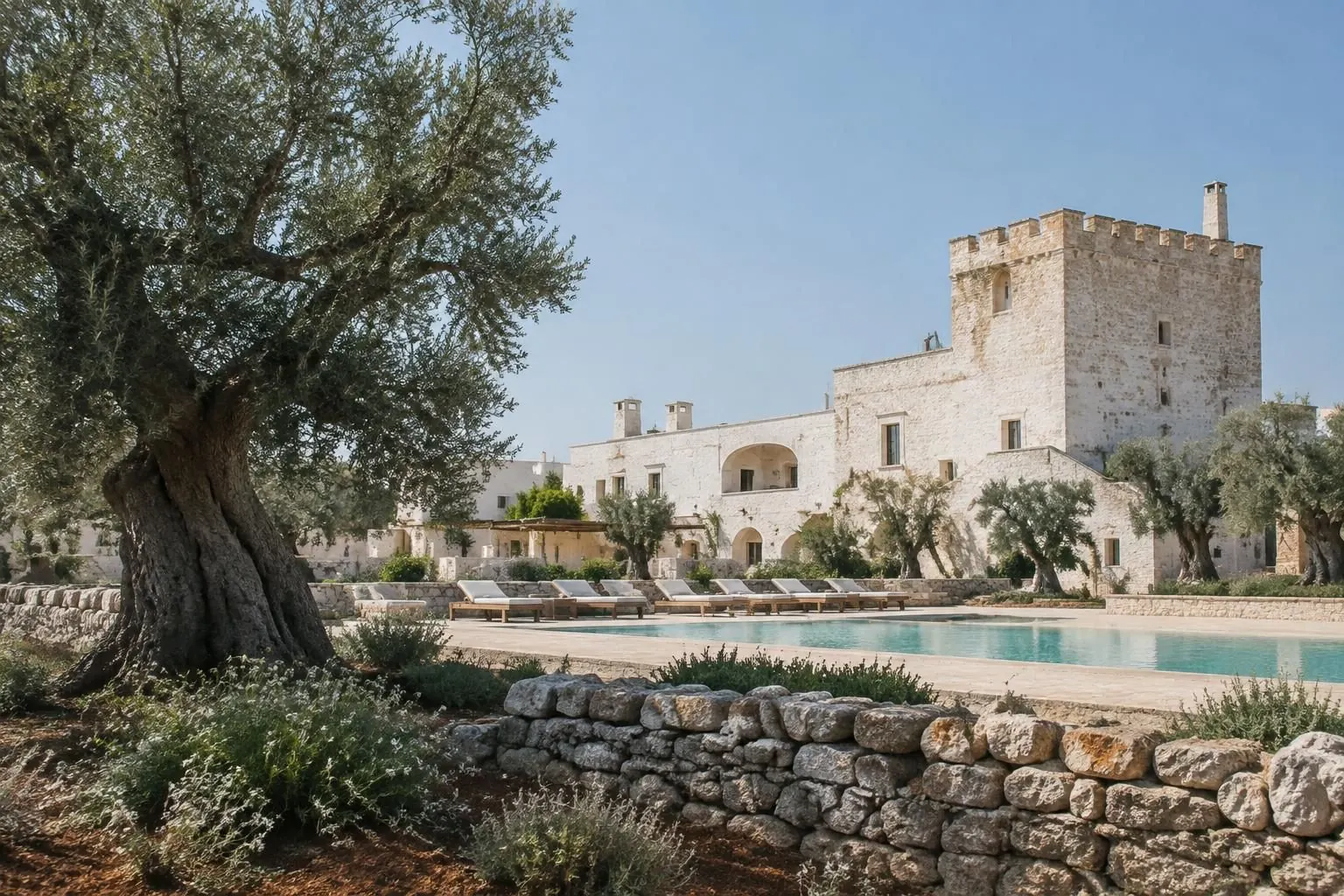
This proposal centres on a four-star masseria reserved exclusively for the group, with a private room for each participant.
The programme includes four nights of accommodation, breakfast, lunch and dinner, meeting space, activities and local transfers. Planning support brings these arrangements into one coordinated programme: selecting suitable options, comparing quotations, following up with suppliers, tracking deadlines and keeping the client informed as decisions are made.
Exclusive use gives the team a shared base for the stay, while individual rooms allow colleagues to have their own space outside the programme.
For 24 participants, the indicative total is €64,800. The value of that figure lies in understanding what it covers: accommodation, work sessions, meals and experiences planned together around one group.
Chianti: three nights in a private villa
September 2027 · 18 guests · €3,500 per person, including VAT · Flights excluded
This proposal is built around a private luxury villa in Chianti, with a more intimate group and a strong emphasis on food and regional experiences.
It includes three nights, breakfast, lunch and dinner, dining at carefully selected restaurants, a private-chef experience, activities and tastings, meeting space, local transfers and planning support.
For 18 participants, the indicative total is €63,000. Although the stay is shorter than the Puglia example, the property, dining choices and smaller group produce a higher cost per person.
These proposals include planning assistance. My attendance during an event can be arranged when requested and carries a separate fee, agreed according to the support required.
What makes the biggest difference to the price?
The property and the way your team uses it
The accommodation is one of the first decisions I revisit when a brief and its budget do not align.
A private villa is not automatically a less expensive alternative to a hotel. Particularly at the higher end, exclusive use can represent a substantial commitment, and the property must also be suitable for the work your team intends to do.
A beautiful dining room does not necessarily function as a meeting room. Layout, seating, equipment and the ability to work comfortably need to be considered before confirming the venue.
Changing the property can be the most effective way to bring a programme within budget while preserving the activities and shared meals that make the stay worthwhile.
Meeting rooms and separate coworking venues
In my experience, hiring a separate coworking venue can cost considerably more than using a suitable meeting room within the hotel.
It also introduces another location into the programme. Depending on the distance, that may affect transport, timing and how meals are organised.
A separate workspace can still be the right choice. I assess it alongside the accommodation and schedule so the client understands the full cost of that decision.
The dining programme
Dining is another area where similar-looking itineraries can carry very different budgets.
Among the options I work with, a simple meal can start at around €30 per person for a main course, water, a glass of wine and coffee. A three-course meal with higher-end wines can exceed €150 per person. These are illustrative meal prices, not universal rates: the restaurant, location, menu and arrangements for the group all matter.
Across several days, those choices have a significant effect on the total. I look at the rhythm of the programme before recommending where a longer restaurant experience, a private chef or a simpler working lunch makes sense.
The activities you choose
Activities deserve a considered place in the budget. They give colleagues a chance to enjoy each other’s company outside a meeting room and experience the region they have travelled to.
Depending on the team, that might mean a cooking class, a vineyard visit, seasonal truffle hunting or a vintage Vespa tour for suitable participants. An escape room or a facilitated team challenge can provide a different kind of shared experience.
Entertainment can also have a place: a close-up magician during an aperitivo, a live acoustic performance over dinner or a quiz host who gets the whole group involved. These are possibilities to assess against the team’s interests and the setting, rather than additions every retreat needs.
The choice should account for different abilities, preferences and levels of participation. The aim is to create enjoyable time together, with enough space in the schedule for people to appreciate it.
Why smaller groups can cost more per person
Some costs are shared across the group. Exclusive use of a villa and certain group transfers are two examples.
When fewer people share those costs, the amount per participant can rise. This is one reason an 18-person retreat cannot be budgeted simply by reducing a 50-person programme in proportion to the guest count.
I assess the property and transport requirements for the actual group, then build the budget around those arrangements.
Does the destination matter?
Yes, although I would always compare actual properties and dates before drawing conclusions.
In the projects I source, Sardinia, the Dolomites, Milan and Rome can sit towards the more expensive end of the options under consideration. Tuscany, Umbria and Sicily can offer a strong balance of setting, hospitality and cost for the right brief.
There are exceptions in every region. A private estate in Tuscany may cost more than a suitable hotel elsewhere, and a lower accommodation price can be offset by more complicated transfers.
The useful question is which destination allows your team to have the experience you want within the complete budget. Our guide to where to host a corporate retreat in Italy explores that decision in more detail.
Two assumptions to resolve early
“Can we organise three days for €500 per person?”
A budget of €500 per person for the entire three-day stay would not support the type of programme described here, with considered accommodation, three meals a day, meeting space, local transfers and organised activities.
It is useful to establish this early, before spending time comparing properties that cannot meet both the expectations and the budget.
“Can we choose the activities when we arrive?”
I would not leave the main group activities until arrival. Private experiences, specialist hosts and group reservations need advance coordination, particularly when they must fit around working sessions and meals.
There can still be flexibility in the programme. The key is to agree which experiences matter most and secure those arrangements first.
How I approach your budget
My work begins with understanding what suits your team: how you want to spend the days, the standard of accommodation you expect, your working requirements and the experiences your colleagues would enjoy.
I then research suitable options, compare supplier quotations, negotiate where possible and check what each price includes. As the programme develops, I track decisions and payment deadlines, follow up with suppliers and keep changes visible so you can understand their effect on the budget.
That process helps you assess the complete proposal before committing. If you would like me present during the retreat, we agree the scope and separate fee for on-site support during planning.
You can read more about our approach to corporate retreats and events in Italy.
Start with a clear brief
You do not need a finished itinerary to begin. Your preferred dates, approximate guest count, number of nights, room requirements and initial budget are enough to start a useful conversation.
Email retreats@theitalianchapter.com, or complete our enquiry form to arrange an introductory call. Tell me what you have in mind, and we can discuss the options that fit your team.
Planning a gathering in Italy?
Tell Alessia who you are bringing together and what you would like the time to feel like.
Start your enquiry