
Magazine · Corporate retreats · Dolomites
Planning a Corporate Retreat in the Dolomites: Seasons, Logistics and Team Activities
How to choose the right season, accommodation and experiences for an alpine retreat, with practical advice for international groups.
By Alessia Piperno
A corporate retreat in the Dolomites needs a programme that works with the mountains. The season, the location of your hotel and the journey your guests make to reach it will influence almost every part of the stay.
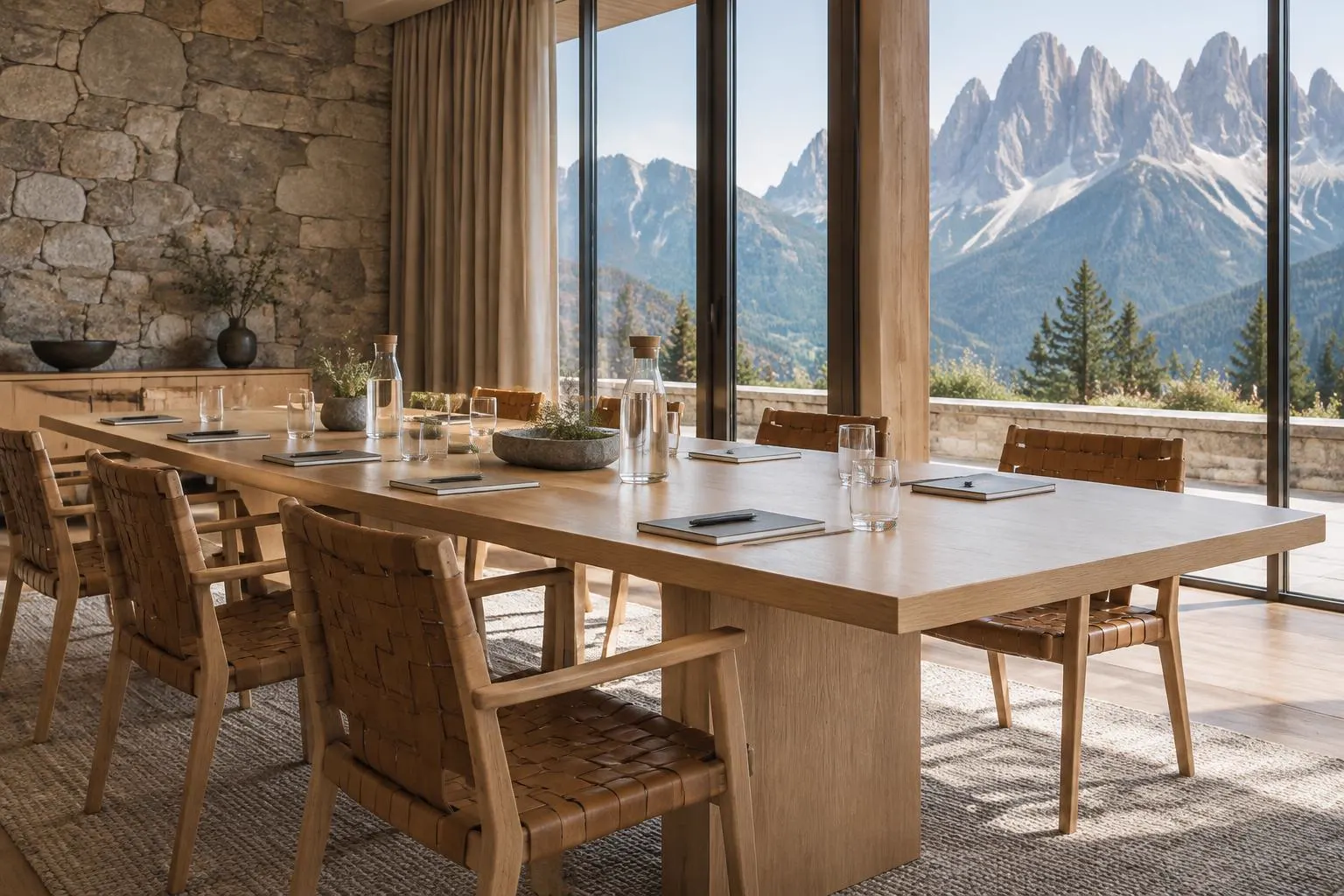
For an incentive trip, the appeal might be a day outdoors followed by a long dinner and an evening at the spa. For a company offsite, it might be a private meeting room with mountain views, followed by time together away from the usual working environment.
I have organised stays and events in Brunico, Madonna di Campiglio, Bolzano and Bressanone, across Trentino and South Tyrol. My starting point is always the same: understand the group, then choose a base that makes the programme practical and enjoyable.
For groups of around 30 guests, I would usually explore hotels with a spa and meeting facilities, or a private chalet where the size and layout suit the group.
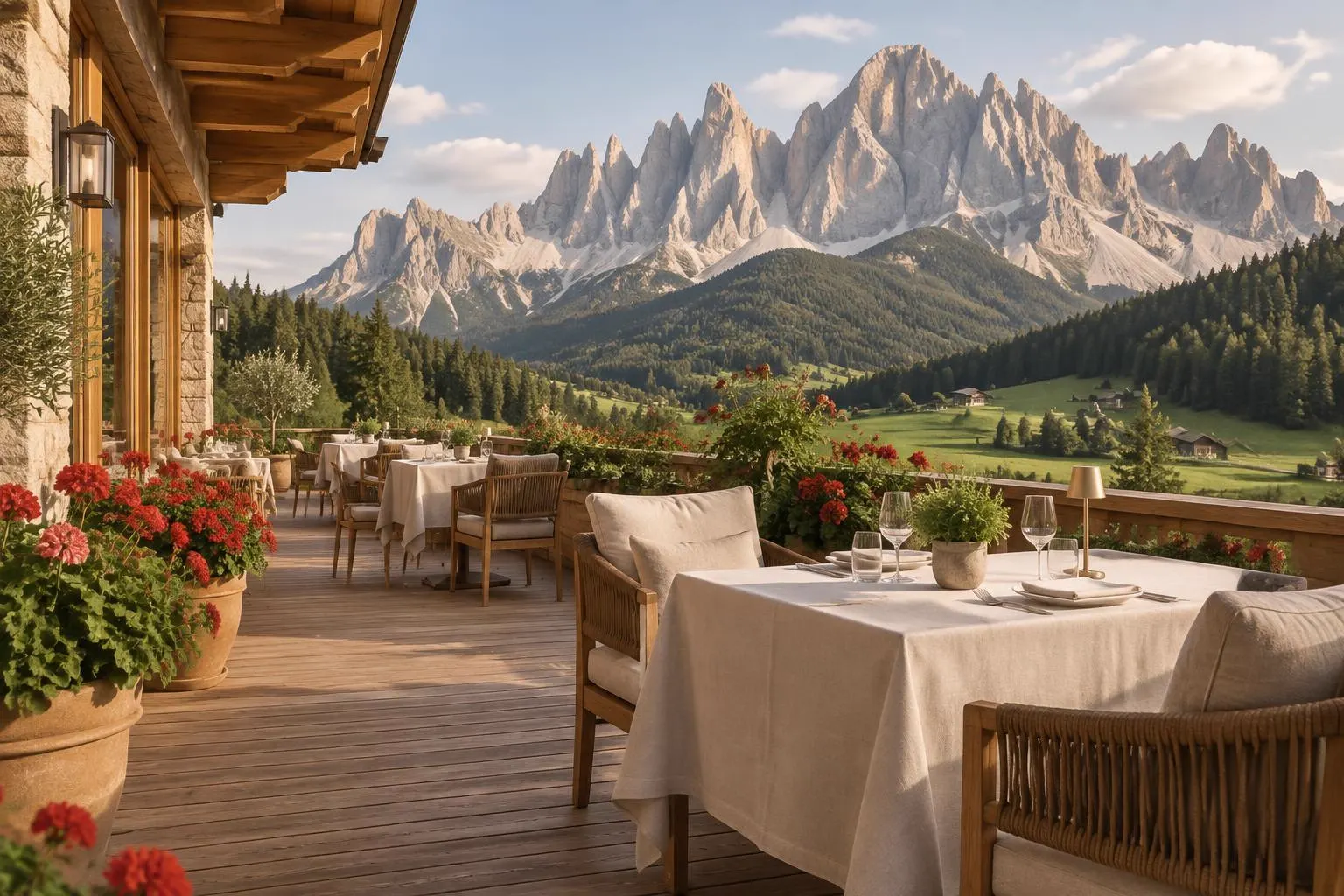
Is the Dolomites region right for your corporate retreat?
I particularly like this setting for incentive programmes and gatherings where the destination is an important part of the experience.
The mountains give the stay a clear character. Guests can spend time outdoors, discover local food and wine, and return to accommodation where there is space to relax.
The same approach can work beautifully for a private celebration. The balance changes according to whether you are bringing colleagues, clients, friends or family.
Before recommending a corporate retreat in the Dolomites, I would discuss three practical questions:
- How much time can the group allow for travel?
- Which experiences are most important to the stay?
- Does the budget support the accommodation and arrangements you have in mind?
For a short trip with a packed meeting schedule, a long transfer may take too much time out of the programme. For a group spending several nights together, that journey may be a worthwhile part of reaching the setting they want.
When should you plan a retreat in the Dolomites?
I usually start by considering December to March for a winter programme and June to August for a summer stay.
These are planning windows, rather than guarantees of particular conditions. The exact dates need to be checked against the chosen resort, altitude, activity providers and seasonal openings.
| Season | Programme ideas | What I would check before confirming |
|---|---|---|
| December–March | Skiing, selected snow experiences, spa time, wine tastings and shared dinners | Snow conditions, lift operations, holiday demand, winter transfers and options for non-skiers |
| June–August | Guided hiking, lake outings, e-bike rides and selected water or mountain activities | Trail conditions, activity locations, guide availability, weather alternatives and travel times |
- Season
- December–March
- Programme ideas
- Skiing, selected snow experiences, spa time, wine tastings and shared dinners
- What I would check before confirming
- Snow conditions, lift operations, holiday demand, winter transfers and options for non-skiers
- Season
- June–August
- Programme ideas
- Guided hiking, lake outings, e-bike rides and selected water or mountain activities
- What I would check before confirming
- Trail conditions, activity locations, guide availability, weather alternatives and travel times
Winter: build the programme around more than skiing
A winter incentive trip can include skiing, but I would establish how many guests actually want to ski before making it the centre of the programme.
Experience levels matter. Confident skiers and complete beginners will need different arrangements, while some guests may prefer to spend their time elsewhere.
I would plan appealing alternatives and bring everyone together again for selected meals or shared experiences.
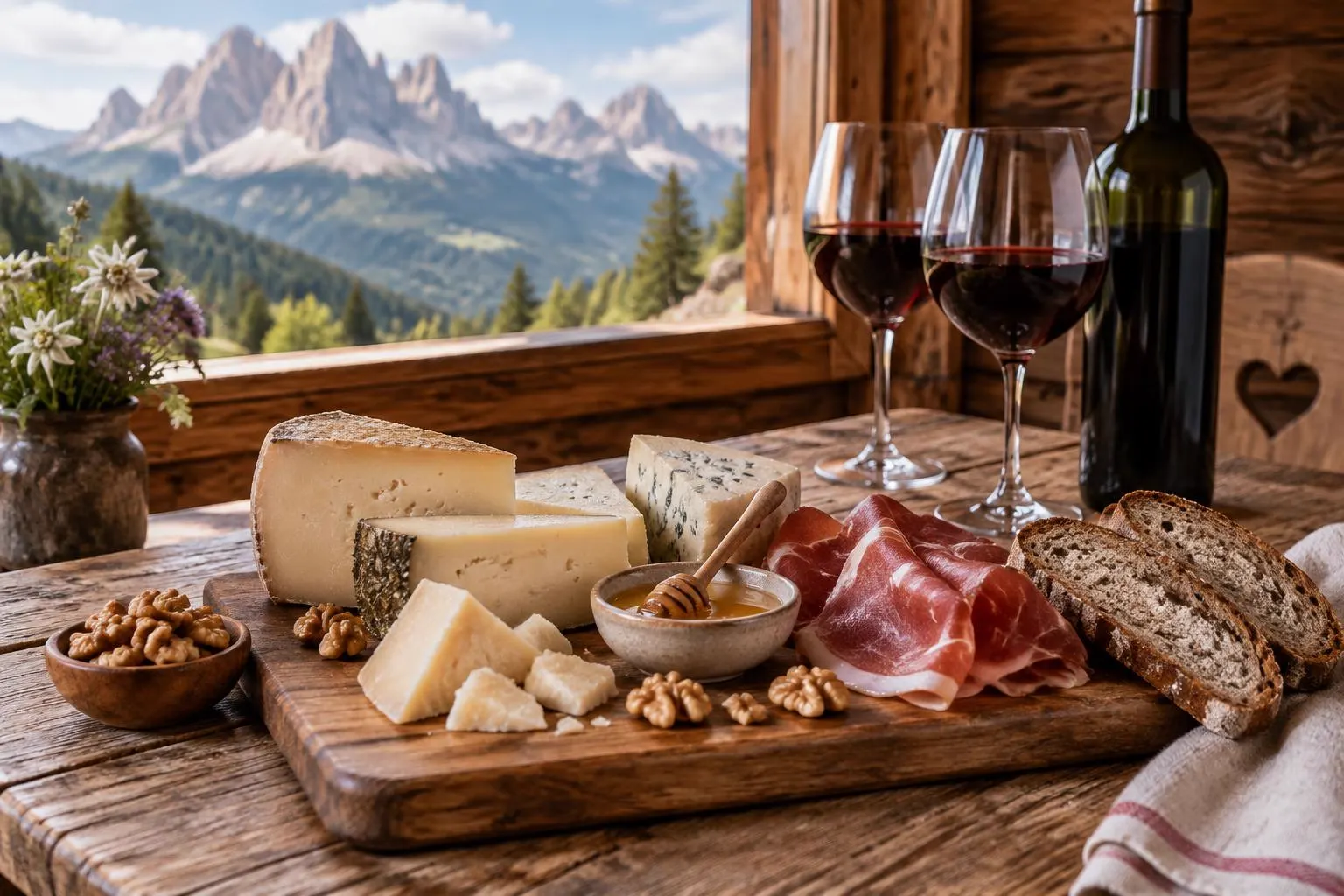
Wine and cheese tastings, spa time and a carefully chosen dinner can give the day a more relaxed rhythm. A sleddog introductory experience may also be an option around Madonna di Campiglio, subject to the operator’s availability, conditions and capacity.
For a group, small-capacity experiences need particular attention. We may need separate sessions or a choice of activities rather than expecting everyone to participate at once.
Summer: choose the landscape around the group
For a summer retreat, I would build the programme around the outdoor experiences the group will genuinely enjoy.
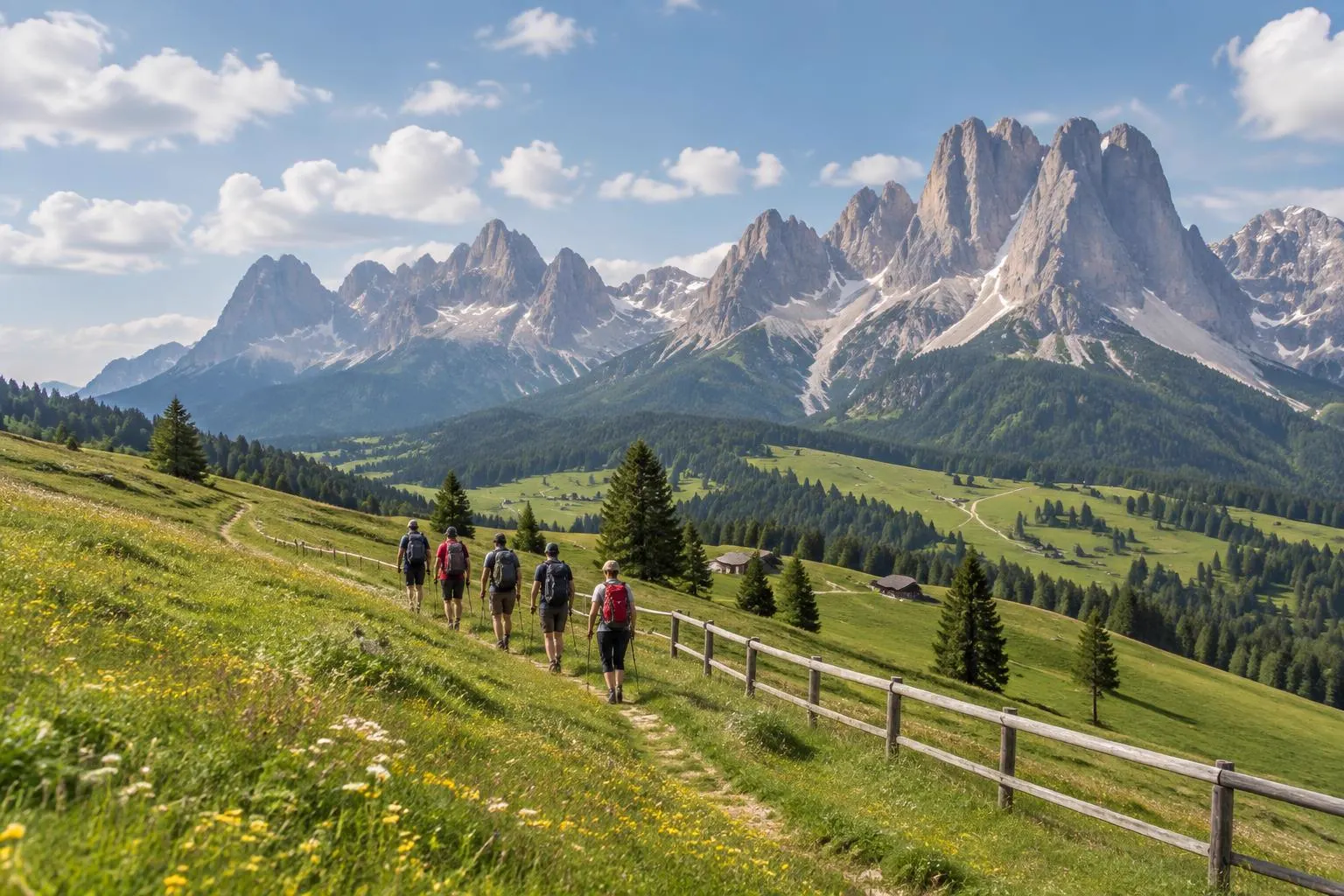
That could mean a guided walk, time beside a lake, an e-bike excursion or a more active day with specialist guides.
The accommodation should make those experiences reasonably accessible. A property can look close to an activity on a map while requiring a substantial road journey.
The location of the hotel and the location of the experiences should be considered together.
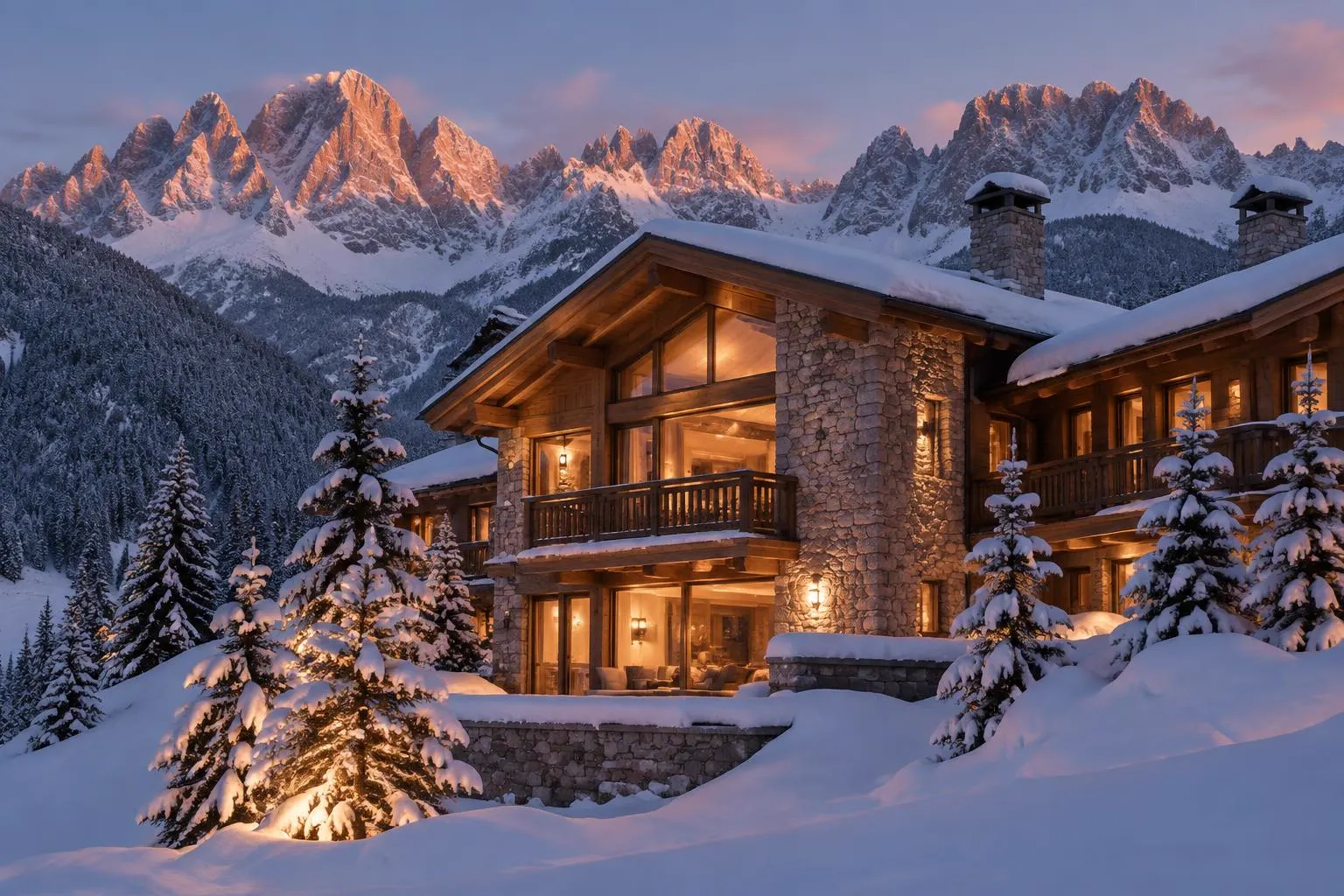
Where should your group stay?
“The Dolomites” covers a broad mountain area, and the surrounding towns offer different bases for a retreat. Choosing a name people recognise is only the beginning.
My experience includes Madonna di Campiglio in Trentino, close to the Brenta Dolomites, and Brunico, Bolzano and Bressanone in South Tyrol.
These locations are not interchangeable. The right choice depends on the accommodation, meeting requirements, activities and arrival arrangements.
For a company offsite, I would first establish how much of the day will be spent working. For an incentive programme, I would give greater weight to the experiences and atmosphere of the stay.
Once those priorities are clear, we can compare suitable properties and the practical implications of each location.
Hotel with a spa or private chalet?
For a group of around 30 people, a hotel with a spa and meeting rooms is often my first option to explore.
It can bring accommodation, meals, work and downtime into one place. That reduces the number of transfers and gives guests more flexibility between scheduled commitments.
A chalet can offer a more private setting, provided its bedroom configuration, shared spaces and service arrangements suit the group.
| Accommodation | Why I would consider it | What needs checking |
|---|---|---|
| Hotel with spa and meeting rooms | Convenient for combining work, dining and relaxation | Room availability, meeting-room privacy, equipment, dining arrangements and spa access |
| Private chalet | A more intimate setting with shared living spaces | Individual bedrooms, bathrooms, staffing, catering and a suitable space for meetings |
| Exclusive-use property | Privacy and greater control over the group’s environment | Full capacity, services included, minimum stay and the cost of exclusivity |
- Accommodation
- Hotel with spa and meeting rooms
- Why I would consider it
- Convenient for combining work, dining and relaxation
- What needs checking
- Room availability, meeting-room privacy, equipment, dining arrangements and spa access
- Accommodation
- Private chalet
- Why I would consider it
- A more intimate setting with shared living spaces
- What needs checking
- Individual bedrooms, bathrooms, staffing, catering and a suitable space for meetings
- Accommodation
- Exclusive-use property
- Why I would consider it
- Privacy and greater control over the group’s environment
- What needs checking
- Full capacity, services included, minimum stay and the cost of exclusivity
A chalet advertised as sleeping 30 people does not necessarily offer 30 individual bedrooms. Room arrangements need to be agreed before it becomes a serious option for a corporate group.
The same applies to working space. A comfortable lounge may suit an informal discussion, but a full day of presentations requires a different setup.
How do international guests reach the Dolomites?
Arrival planning is one of the most important parts of organising an alpine corporate retreat.
For guests travelling from the United States, I would plan around a major international gateway rather than assume a direct flight into Bolzano. Bolzano is a regional airport with a limited, seasonal route network; any connecting flight needs to be checked for the actual travel dates.
Depending on the destination and flight availability, options may include Milan, Venice, Verona or another suitable gateway. The onward journey can involve a private road transfer or a train followed by a transfer to the property.
Bolzano is not a necessary stop for every itinerary. For Madonna di Campiglio, for example, I would assess the route around the final destination rather than automatically sending guests through Bolzano.
For a group arriving on different flights, I coordinate arrival information and consider whether shared transfers can be arranged without creating long waits.
I would also leave the first day relatively light. Guests should have time to arrive, settle in and enjoy dinner without rushing straight into a demanding activity.
Team activities for a Dolomites retreat
The choice can include relaxed food and wine experiences as well as more active excursions.
Depending on the base and season, I can explore:
- Wine tastings and local cheese tastings.
- Guided hikes and lake outings.
- E-bike excursions.
- Horse riding.
- Kayaking and rafting.
- Climbing and via ferrata experiences.
- Canyoning.
- Skiing and selected winter experiences.
- Spa time and quieter alternatives.
Some water activities take place in neighbouring valleys rather than beside the hotel. They should only become part of the programme when the travel time makes sense.
Climbing, via ferrata, canyoning and other technical activities require specialist providers and an assessment of participants’ experience and suitability. I would never choose them simply because they look impressive in a proposal.
For a mixed group, I prefer to offer alternatives while keeping some moments that everyone shares. Guests might choose different daytime experiences and meet again for dinner.
You can read more about this approach in Team-Building Activities in Italy: Choosing the Right Experiences for Your Group.
Leave enough space between meetings and activities
One of the easiest mistakes is trying to fit too much into each day.
For a mountain retreat, the programme needs to account for transfers, equipment, changing clothes and weather, alongside the experience itself.
My preference is to plan one main activity per day, with meals and working sessions arranged around it. A full day outdoors should have the time it needs.
On a meeting day, a shorter experience or a relaxed tasting may be more appropriate. Guests should also have the opportunity to use the spa, answer messages or spend unstructured time together.
A retreat feels more considered when people have time to enjoy where they are staying.
What budget should you allow?
For the high-end Dolomites programmes I propose, I would use €1,200 per person per day as a starting budget, including:
- High-end accommodation.
- Three meals per day.
- Transfers included in the agreed programme.
- One daily activity.
This is an indicative starting point for my proposed level of programme, rather than an average price for every retreat in the region.
The final quotation depends on the dates, property, room arrangements, group size, transfers and selected experiences. Flights are budgeted separately.
Meeting-room hire, specialist equipment, exclusive-use arrangements and any on-site coordination requirements are clarified in the proposal, so you can see which services are included and which carry an additional charge.
For broader context, read How Much Does a Corporate Retreat in Italy Cost?.
Plan for weather and seasonal availability
The outdoor programme should have alternatives agreed before the group arrives.
Depending on the property and location, that might mean moving a working session, arranging a tasting or using a suitable indoor space for a shared experience.
Some hotels, restaurants, lifts and activity providers operate seasonally. A quieter date can change the range of services available, so the whole programme needs to be checked before confirming the stay.
Weather alternatives should be realistic for the number of guests. A small indoor venue is not a useful backup for a group of 30 unless the sessions can be organised accordingly.
One point of contact for your alpine retreat
With The Italian Chapter, I coordinate the accommodation, suppliers, transport and programme around the group’s priorities.
You work with me directly. I gather the information each provider needs, keep track of the arrangements and remain your point of contact when something changes.
For an international group, that continuity matters: flight changes, activity timings and hotel arrangements all affect one another.
I remain available remotely during the event and can also attend in person when requested, with on-site support quoted separately.
The aim is to make the experience manageable for the organiser and enjoyable for the people attending.
Start with the experience you want to create
A successful corporate retreat in the Dolomites starts with a clear brief: who is coming, how much time they have, what they want to do and the level of hospitality they expect.
With those priorities established, we can choose the season, property and programme together.
Planning an incentive trip or corporate retreat in the Dolomites? Share your preferred dates, approximate guest numbers and budget, along with the balance you would like between meetings, activities and relaxation.
Planning a gathering in Italy?
Tell Alessia who you are bringing together and what you would like the time to feel like.
Start your enquiry